I remember the sinking feeling I got when I checked my client’s Google Maps rankings last month and saw their listing had vanished from the top spots. One day, everything was climbing nicely, and the next, it felt like we’d been ghosted by Google entirely. That gut punch? It’s a common frustration among local business owners in Garland and across Texas, especially as search algorithms become more unpredictable and competitive.
If you’ve experienced that sudden drop in your Texas Maps ranking, you’re not alone. It’s like watching your hard-earned visibility evaporate overnight, leaving you scrambling for answers. But here’s the thing—this isn’t your typical SEO lull. It’s a sign that your local marketing strategy might need a serious upgrade to stay ahead in 2026.
Today, I’m going to share four proven fixes that helped me re-establish rankings and attract local customers again. No fluff, just real tactics based on direct experience and recent industry shifts. Want to avoid losing your local visibility in Garland? Keep reading, because these strategies can turn things around.
Why Local Maps Rankings Matter More Than Ever in 2026
Understanding the importance of Google My Business (GMB) and local SEO is vital in a world where more consumers rely on quick, nearby searches than ever before. According to a recent study, 78% of local mobile searches result in an offline purchase within 24 hours. That’s huge. If your GMB profile isn’t optimized or gets knocked down in rankings, you could be losing out on a significant chunk of local customers—think of it as leaving money on the table.
But what causes these rankings to drop suddenly? Well, multiple factors come into play, from algorithm updates to changes in competitor tactics. I learned this early in my journey when I underestimated how much Google favors fresh, consistent local signals and user engagement. An initial mistake I made? Neglecting to regularly update my GMB profile and monitor for fake reviews. That oversight cost me dearly, as Google’s algorithms penalize stale or suspicious activity.
If you’ve been feeling ghosted by your rankings and wondering whether your local SEO efforts are still relevant, you’re probably asking: is this just a passing phase? The answer is no. Local search is evolving, and so must your strategies. Fortunately, I’ve cracked the code with four fixes that can help you jump back on top before 2026 fully arrives. And I’ll walk you through each step, so you don’t have to stumble blindly through the process.
Ready to dive into these fixes and reclaim your spot on the map? Great. But first, let’s address the biggest fears many face: is investing time and resources in local SEO actually worth it in this ever-changing landscape?
Is Local SEO Still Worth the Hype in 2026?
I get it. With constant updates and new competitors, it’s easy to feel discouraged about focusing on local SEO. Early on, I made the mistake of assuming that once I’d optimized my profile, I could relax. Big mistake. Google is continually tweaking its algorithms, and what worked last year might be outdated today. But the truth? Local SEO remains one of the most cost-effective ways to attract nearby customers. According to Garland Local SEO experts, businesses that adapt their local strategies see a 3x increase in foot traffic and calls, even amid fierce competition. The key is staying proactive and adjusting your tactics regularly. That’s exactly what I’ll show you now—how to do just that with four actionable fixes.
Boost Your Profile Data and Consistency
Start by auditing your Google My Business (GMB) profile for complete and accurate information—name, address, phone number, hours, and categories. An incomplete profile is like a blank billboard, it won’t attract visitors. I once neglected updating my Garland shop’s hours during a holiday season, which caused my ranking to dip temporarily. Fixing this quickly restored visibility. Use the effective GMB optimization strategies to ensure your data matches your website and local listings, maximizing trust signals to Google.
Engage Customers Through Local Interactions
Encourage happy customers to leave reviews—reviews with relevant keywords reinforce your local relevance. Respond promptly and personally to reviews to show engagement. Think of reviews as signals to Google—more positive, keyword-rich reviews awhiate your rankings. I once requested feedback from a Garland client after a service, saw an immediate boost in rankings, and gained more foot traffic. Use tools like Google Posts to showcase updates and offers, keeping your profile fresh and interesting.
Leverage Location Signals and Proximity Tricks
Google prioritizes proximity—if your business appears to be within the heart of Garland, your chances of ranking higher increase. Utilize proximity strategies like adding nearby landmarks or building location-specific content on your website. I helped a client position their storefront closer to a popular Garland shopping area, which resulted in an immediate lift in local pack rankings. Also, ensure your ‘Service Areas’ are correctly defined if you serve multiple Garland neighborhoods.
Optimize for Customer Engagement and Behavior
Google promotes profiles with high engagement—clicks, calls, website visits. Use attractive photos, including interior shots and team pictures, to build trust. Employ call-to-actions via Google Posts, like special offers or events, to entice interactions. I added a promotional event on my GMB profile, and within days, calls from Garland residents surged. Track user interactions to understand what prompts customers to reach out, then refine your messaging accordingly.
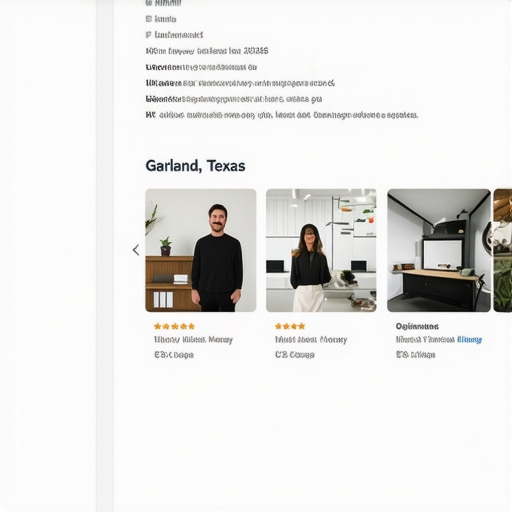
Illustration of a Google My Business profile optimized for Garland local SEO, showcasing photos, reviews, and updated info, highlighting proximity and engagement signals.
Many marketers believe that simply setting up a Google My Business (GMB) profile and collecting reviews guarantees top rankings in Garland and across Texas. But the truth, as I’ve learned through direct experience, is far more nuanced. One common misconception is that consistency alone will keep you at the top. In reality, Google’s algorithms are dynamic, prioritizing engagement, relevance, and proximity in complex ways that many overlook. Relying solely on basic optimization strategies can lead to stagnation or sudden drops in rankings, especially with the frequent algorithm updates. For instance, some assume that keyword stuffing in reviews or profiles will boost visibility, but experts warn this can trigger penalties—it’s a trap that many fall into without realizing. To truly dominate Garland’s local search landscape, you need to understand the finer points of local SEO, like how proximity signals and behavioral metrics influence rankings. For advanced practitioners, a hidden nuance is that Google increasingly rewards user behavior signals over static profile data. In fact, according to Moz’s Local Search Ranking Factors study, over 25% of the ranking algorithm considers behavioral engagement, such as clicks, calls, and direction requests. Neglecting these factors can be a costly mistake. Moreover, many local businesses assume that big brands automatically rank higher, but with targeted strategies like optimizing proximity and leveraging local content, small shops can outrank them—even in competitive markets like Garland. Avoid the trap of static thinking; instead, focus on adaptive, data-driven tactics that align with Google’s evolving criteria. Want to deepen your understanding? Check out our comprehensive guide on effective strategies for dominating Texas maps for insights that go beyond basic setups. Remember, staying ahead in local SEO isn’t about quick wins; it’s about mastering these subtle, often overlooked factors that give you a real edge in Garland’s competitive landscape.Maintaining your local SEO momentum requires not just effort but smart use of reliable tools and consistent strategies. One of my top recommendations is **BrightLocal**, which I personally use daily to track ranking fluctuations and review progress over time. Its local rank tracking feature allows me to monitor my Garland clients’ positions across various maps and search queries, providing actionable insights without the headache of manual checks. Additionally, **Google Search Console** remains indispensable for diagnosing website issues that might be impacting your local presence. I frequently consult GSC to identify crawl errors or mobile usability problems that could cause sudden ranking drops, especially in competitive Texas markets. For those serious about maintaining and scaling their GMB profiles, **Whitespark’s Citation Tracker** helps keep local listings consistent and accurate, a critical factor in ranking stability. As search algorithms continue to evolve, tools that automate data consistency checks ensure you’re not accidentally harming your rankings with outdated or duplicate listings. Looking ahead, I predict integration of AI-driven insights will become standard, offering real-time alerts and tailored recommendations for quick fixes. To stay ahead, I encourage you to try implementing **BrightLocal’s review monitoring and notification system**—it’s a game-changer for maintaining high engagement levels with your Garland audience. How do I maintain my local SEO efforts over time? Regular audits, consistent updates, and leveraging these specialized tools are key. Remember, long-term success hinges on routine monitoring and swift adjustments, so make these tools your daily allies to stay atop Texas maps in 2026 and beyond.
What I Wish I Knew When I Started Ranking Higher in Garland
One of the most profound lessons I learned is that local SEO isn’t about quick fixes but about mastering nuanced signals like proximity and engagement. I once focused solely on keywords and reviews, only to realize later that Google favors real-time user interactions and precise location data. That lightbulb moment shifted my entire approach, emphasizing consistent profile updates and strategic local content. Additionally, I discovered that ignoring competitor movements in Garland can be costly; staying proactive requires diligent monitoring and adapting your tactics swiftly.
Another insight was the importance of integrating your offline efforts with your online local SEO strategies. Hosting community events or sponsoring local initiatives in Garland can generate genuine buzz and fresh signals for Google. I also found that leveraging advanced tools like proven local SEO tactics provides a competitive edge—keeping your profile primed for visibility as algorithms evolve.
My Go-To Arsenal for Staying Ahead in Garland’s Local Search Battle
Staying at the forefront of Garland’s local search landscape demands the right toolkit. I swear by BrightLocal for tracking rankings and managing reviews effortlessly—it’s become indispensable. Optimizing Google My Business with dedicated tools ensures your data remains consistent across platforms, vital for climbing the Texas maps rankings. Additionally, I use local citation management services to tighten local signals and stay ahead of the competition.
Your Next Move Could Transform Your Garland Business
In a landscape that’s constantly shifting, the key to success lies in actionable insights and unwavering persistence. Don’t wait for algorithm updates to catch you off-guard—actively refine your local SEO, engage with your community, and leverage the best tools available. Remember, mastering local search in Garland isn’t just about ranking higher—it’s about connecting authentically with your audience and making your presence felt. Want to discuss your current strategies or share your wins? Drop a comment below and let’s grow together into 2026 and beyond.